In this Article
Discover why honey has been treasured for thousands of years across cultures and healing traditions. From Ancient Egypt and Greece to traditional electuaries and functional honey blends, explore the enduring role of honey as food, medicine, and a foundation for herbal wellness.
Written by

Deborah Freudenmann
Products Related
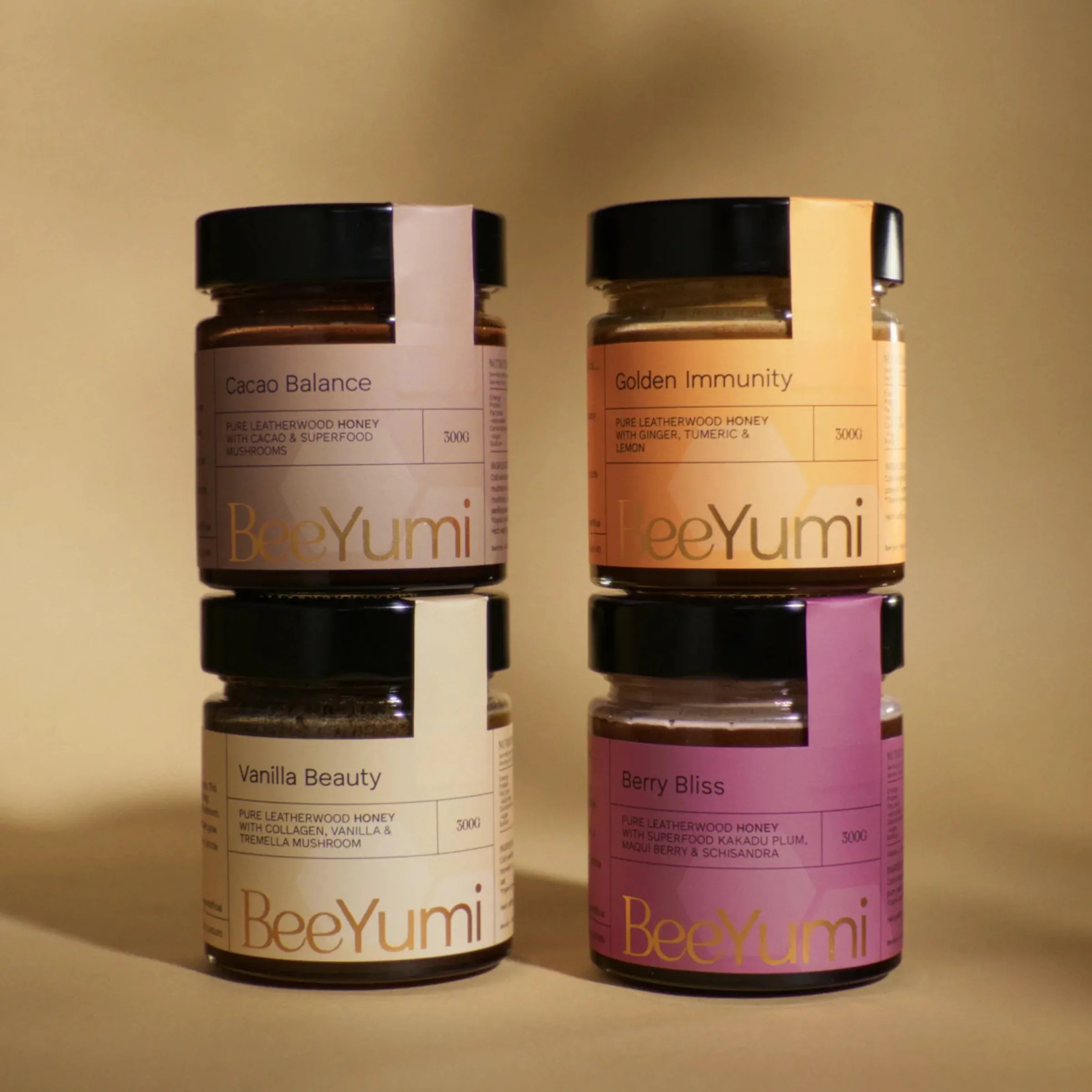
The Core Four
Our signature blends, crafted to support balance, energy, and daily nourishment.
Honey & Ingredients - Traditional Wisdom
|
How honey became one of the world's oldest food-as-medicine traditions and why it is still valued today
Long before pharmacies, supplements, and wellness trends existed, honey already held a special place in cultures around the world.
It was valued as a food, treasured as a sweetener, used as a preservative, and often regarded as something far more than a simple ingredient in the kitchen.
Across thousands of years and countless generations, honey has appeared in some of the world's oldest medical texts and healing traditions. From Ancient Egypt and Greece to Ayurveda and Traditional Chinese Medicine, honey was frequently used alongside herbs, roots, spices, and botanicals in preparations designed to support health and wellbeing.
This is one of the reasons we find honey so fascinating.
While modern wellness often presents food and medicine as two completely separate categories, many traditional cultures saw them as deeply interconnected. The foods people consumed every day were often chosen not only for nourishment and enjoyment, but also for the role they played in supporting the body over time.
Honey sits at the centre of many of those traditions.
The ancient Egyptians knew honey was special
Some of the earliest written references to medicinal honey date back more than 4,000 years.
Ancient Egyptian medical texts describe honey being used in a wide variety of preparations, and jars of honey have even been discovered in Egyptian tombs that remain remarkably well preserved thousands of years later.
Its ability to resist spoilage fascinated people long before anyone understood the science behind it.
To the Egyptians, honey was considered valuable enough to be offered to the gods, used in medicine, and traded as a prized commodity.
Even today, there is something extraordinary about a food that can remain stable for years while retaining its flavour and character.
Honey in ancient Greece
The Ancient Greeks also held honey in high regard.
Hippocrates, often referred to as the father of medicine, wrote about honey in various contexts, while athletes consumed honey as a source of nourishment and energy.
In Greek mythology, honey was associated with vitality, longevity, and abundance. It was not unusual for honey to be combined with herbs and plants, creating preparations that resemble what we would now call herbal honey blends or electuaries.
The idea of combining honey with botanicals was already well established thousands of years ago.
Honey in traditional herbal medicine
It was often used as a carrier for herbs.
Anyone who has tasted certain medicinal herbs understands why. Some herbs are wonderfully beneficial but not particularly enjoyable to eat. Honey helped solve that problem by making preparations more pleasant, easier to consume, and naturally preserved.
This practice eventually gave rise to preparations known as electuaries, which were created by combining powdered herbs with honey into thick, spoonable blends.
Today, these preparations are often referred to as functional honey blends, herbal honey blends, or medicinal honey preparations, but the underlying idea remains the same.
Honey provided the foundation, while the herbs contributed their own unique qualities.
Why honey works so well
Part of what makes honey so unique is that it brings far more to the table than sweetness alone.
Raw honey naturally contains enzymes, antioxidants, amino acids, and a diverse range of plant compounds gathered from the flowers visited by bees.
Its thick texture makes it an excellent medium for herbs and spices, while its naturally low moisture content helps preserve ingredients over time.
From a practical perspective, honey solved several problems at once. It helped preserve herbs, improved flavour, and created a preparation that people actually wanted to consume consistently.
Sometimes the most enduring traditions survive because they are simple and effective.
The return of food as medicine
In many ways, the growing popularity of functional foods reflects a return to ideas that are actually very old.
For generations, people relied on foods, herbs, spices, and traditional preparations as part of everyday life. Health was not always something that happened through capsules or powders. Often it began in the kitchen, the garden, or around the family table.
That doesn't mean modern medicine and science are not valuable. They absolutely are. But there is also something worth learning from traditions that have endured for thousands of years.
The continued use of honey across so many cultures suggests that people recognised something special about it long before modern laboratories began studying its composition.
Why we love honey
When we created BeeYumi, we were not trying to reinvent honey.
If anything, we were inspired by the long history of people combining honey with herbs, spices, mushrooms, berries, and other nourishing ingredients.
The concept behind our blends is ancient.
Honey has been used as a food, a preservative, a carrier for herbs, and a valued ingredient in traditional healing systems for thousands of years. Modern functional honey blends simply continue that story in a way that fits contemporary life.
Perhaps that is why honey remains so timeless.